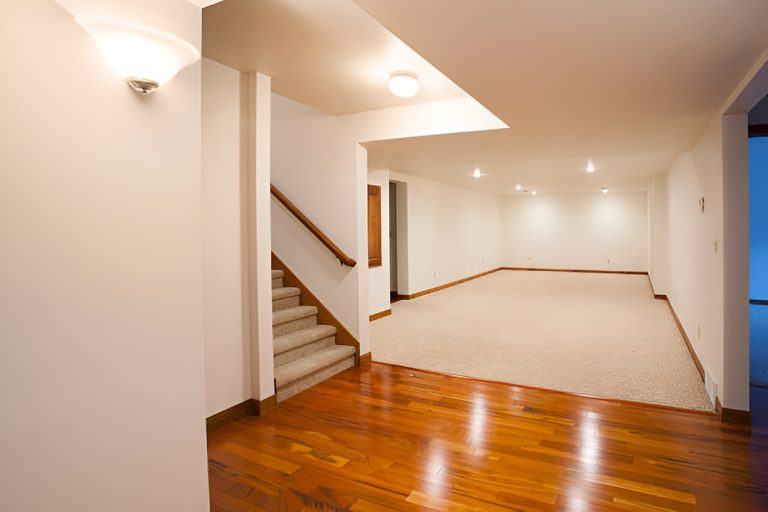
Highlights:
- A finished basement adds meaningful home value in 2026, but the increase depends heavily on quality, usability, and local market demand rather than a fixed formula.
- Return on investment is generally strong, with most projects recovering a large portion of their cost, especially when the basement is professionally finished and designed for everyday use.
- Appraisers do not value basements the same as above-ground living space; instead, they typically assign a lower per-square-foot value based on livability factors like lighting, ceiling height, and moisture control.
- The biggest drivers of added value include functional design, natural light, proper egress, and high-quality finishes that make the space feel like a natural extension of the home.
- Market conditions play a major role, meaning the same basement renovation can yield very different results depending on location, housing demand, and buyer expectations.
- Adding features like bathrooms, flexible living zones, and rental potential can significantly increase both perceived value and actual resale price.
- Poor execution—such as moisture problems, bad lighting, or over-customized layouts—can reduce value instead of increasing it, making proper planning essential for ROI.
A finished basement has always been one of those upgrades homeowners debate. It’s not as flashy as a kitchen remodel or as visible as curb appeal improvements, but it quietly adds usable space—and potentially serious value.
In 2026, with rising home prices, flexible living needs, and increasing demand for multi-purpose spaces, finishing a basement is no longer just a “nice-to-have.” It’s becoming a strategic investment.
So how much value does a finished basement really add today? The answer depends on several factors, but the short version is this: a well-done finished basement can increase your home’s value by 10% to 30%, depending on quality, location, and functionality.
Let’s break that down in detail so you can understand what drives that value and how to maximize your return.
Why Finished Basements Are More Valuable Than Ever
The way people use their homes has changed significantly in recent years. Buyers are no longer just looking for square footage—they’re looking for flexibility.
A finished basement delivers exactly that.
Here’s why demand has grown in 2026:
- Remote and hybrid work setups require extra rooms
- Families need multi-functional spaces for living and entertainment
- Rising housing costs make expanding existing homes more appealing
- Rental income opportunities are more attractive than ever
Unlike traditional additions, a basement already exists structurally. That makes it a more cost-effective way to expand livable space without increasing your home’s footprint.
What Is the Typical Return on Investment?
The return on investment (ROI) for a finished basement varies widely, but national averages give a good starting point.
Average ROI Range in 2026:
- 70% to 80% ROI for standard finishes
- Up to 90% ROI in high-demand markets
- Lower returns (50%–60%) for basic or poorly executed renovations
For example:
- Spend $30,000 → Potential value increase: $21,000–$27,000
- Spend $50,000 → Potential value increase: $35,000–$45,000
That said, ROI isn’t just about resale value. You’re also gaining usable square footage, which can significantly improve your quality of life while you live in the home.
How Appraisers View Finished Basements
One of the most misunderstood aspects of basement renovations is how they’re treated during a home appraisal. Many homeowners assume that finishing a basement automatically increases a home’s value at the same rate as adding square footage above ground. In reality, appraisers don’t evaluate basements on equal footing with main living areas.
Instead, they apply a more nuanced approach that focuses on how usable and marketable the space actually is, not just the fact that it exists.
In most cases, appraisers will:
- Value below-grade space (such as basements) separately from above-grade square footage
- Assign a lower price per square foot compared to main floors of the home
- Adjust value based on livability factors such as lighting, ceiling height, and ventilation
- Consider whether the basement feels like true living space or simply “extra area”
What this means in practical terms is that a finished basement does add value, but it does so at a different rate than the rest of the home. For example, if your main living space is valued at $200 per square foot, your basement might only be valued at $70–$120 per square foot depending on quality and local demand.
However, this does not mean basements are undervalued in a negative sense. Appraisers are simply aligning value with buyer perception. Most buyers still view basements as secondary space unless they are fully finished and highly functional.
What Increases Appraised Value Within a Finished Basement:
- Proper insulation and moisture control that make the space livable year-round
- Finished ceilings with adequate height (avoiding that “cramped” feeling)
- Consistent flooring and design that matches the rest of the home
- Legal egress points for safety and code compliance
- Clearly defined functional spaces (bedroom, office, family room, etc.)
When these elements are present, appraisers are more likely to treat the basement as a meaningful extension of the home rather than unfinished or bonus space. This is where value increases become more noticeable.
Even though it doesn’t always translate dollar-for-dollar with above-ground square footage, a well-executed basement still plays a major role in boosting overall property value—especially when it significantly improves usable living space.
What Factors Affect the Value Boost?
The increase in home value from a finished basement is not fixed. Two homes with the same basement size can have dramatically different outcomes depending on design, quality, and usability. In 2026, buyers are more selective than ever, which means details matter.
Several key factors influence how much value your finished basement actually adds.
1. Quality of the Finish
The quality of materials and workmanship is one of the strongest predictors of return on investment. A basement that feels polished, durable, and intentional will consistently outperform one that feels rushed or budget-driven.
High-quality finishes signal to buyers that the space is fully integrated into the home rather than an afterthought.
Features that increase perceived and actual value:
- Recessed or layered lighting that eliminates dark corners
- Adequate ceiling height that avoids a confined feeling
- Moisture-resistant flooring such as luxury vinyl or sealed concrete
- Clean, modern finishes that match the main floors of the home
- Soundproofing between floors for privacy and comfort
- Smooth drywall work with no exposed utilities or unfinished edges
On the other hand, low-quality finishes can reduce value or even create buyer hesitation. Visible pipes, poor lighting, or cheap materials often lead buyers to mentally subtract value, even if the space is technically usable.
2. Functionality of the Space
Beyond appearance, functionality plays a huge role in determining value. A finished basement should not just look good—it should serve a clear purpose or multiple purposes.
Buyers today prefer flexible living spaces that can adapt to different needs over time.
High-value basement functions include:
- Guest suite or private bedroom setup
- Dedicated home office or remote work area
- Entertainment zone or media room
- Home gym or wellness space
- Children’s playroom or family lounge area
The more practical and adaptable the layout, the more appealing it becomes to a wider range of buyers. A basement that is clearly zoned into functional areas tends to feel larger and more useful, which directly influences perceived value.
Open-concept layouts also tend to perform well, especially when combined with smart storage solutions and flexible furniture arrangements.
3. Presence of a Bathroom or Kitchenette
Adding a bathroom—or even a small kitchenette—can significantly elevate the value of a finished basement because it transforms the space from “extra room” into a potentially independent living area.
This is one of the most impactful upgrades in terms of both usability and resale value.
Why this upgrade matters:
- It allows the basement to function as a self-contained living space
- It increases suitability for rental opportunities or guest stays
- It supports multi-generational living arrangements
- It enhances long-term flexibility for future homeowners
In many cases, this upgrade can shift buyer perception entirely. Instead of seeing a basement as secondary space, buyers may view it as a full extension of the home’s living quarters.
Even a simple three-piece bathroom (toilet, sink, shower) can significantly improve appraisal outcomes and buyer interest.
4. Natural Light and Egress
Lighting is one of the most important psychological factors in basement valuation. Dark, enclosed basements often feel smaller and less inviting, even if they are technically large in square footage.
Improving natural light and ensuring proper egress can dramatically change how the space is perceived.
Key improvements that boost value:
- Egress windows that meet safety and code requirements
- Enlarged window wells to allow more sunlight penetration
- Light-colored wall finishes that reflect available light
- Layered artificial lighting (ambient, task, and accent lighting)
- Strategic mirror placement to enhance brightness
Beyond aesthetics, egress windows also serve a critical safety function. In many regions, they are required for basement bedrooms, which directly impacts whether the space can be legally marketed as additional sleeping quarters.
A brighter, safer basement is almost always valued higher than a dark, enclosed one—even if the square footage is identical.
5. Local Market Conditions
Location remains one of the most powerful factors in real estate valuation, and finished basements are no exception. The same renovation can yield very different returns depending on where the home is located and what buyers in that market expect.
In high-cost or competitive housing markets:
- Buyers place strong value on any additional livable square footage
- Finished basements often serve as a major selling point
- Homes without finished basements may appear less competitive
- Multi-use basement spaces can justify higher listing prices
In warmer climates or regions where basements are uncommon:
- Basements may not be expected or prioritized by buyers
- Value increases can be more modest unless the space is highly functional
- Above-ground additions may carry more perceived value
Other local factors that influence value:
- Average home size in the neighborhood
- Demand for rental or multi-generational housing
- Climate-related usability (humidity, flooding risks, insulation needs)
- Local building codes and renovation standards
Understanding your market is essential before investing heavily in a basement renovation. In some areas, a finished basement can be a major competitive advantage. In others, it may function more as a lifestyle upgrade than a direct value multiplier.
How Much Value Does It Add Compared to Other Projects?
If you’re deciding between renovations, it helps to compare a finished basement to other popular upgrades.
Basement vs Kitchen Remodel
- Kitchen remodel: 60%–80% ROI
- Basement finish: 70%–80% ROI
Basement vs Bathroom Addition
- Bathroom addition: 60%–70% ROI
- Basement finish (with bathroom): Often higher combined ROI
Basement vs Home Addition
- Home addition: Expensive, longer timeline
- Basement finish: More cost-efficient, faster
A finished basement often delivers one of the best balances between cost, usability, and resale value.
When a Finished Basement Adds the Most Value
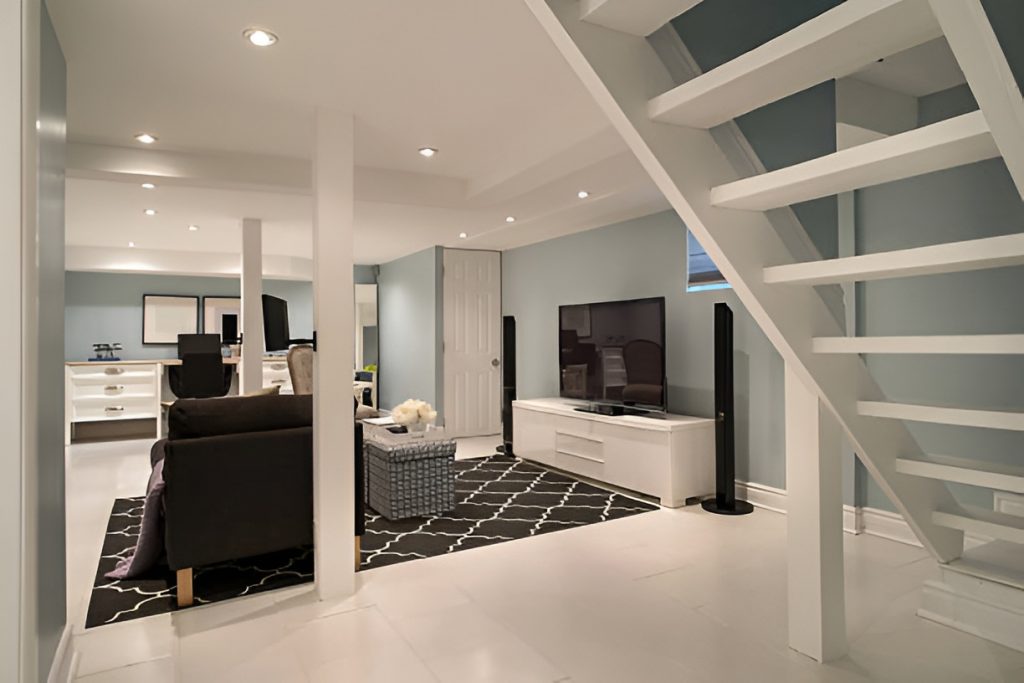
Timing and context matter. There are situations where finishing a basement makes especially strong financial sense, and understanding these scenarios can help you decide whether the investment will actually pay off in your specific situation. In many cases, the value boost isn’t just about the renovation itself, but about how well it aligns with market demand and your home’s current limitations.
You’re Planning to Sell Within a Few Years
A well-finished basement can significantly improve your home’s market performance when you’re preparing for a sale. Buyers often see it as a “bonus level” that increases livable square footage without the cost of an addition, which can make your listing stand out.
When done well, it can:
- Increase listing price by improving perceived livable space
- Attract a wider pool of buyers, especially families
- Reduce time on market by making the home more competitive
- Improve staging options for showings and photos
Beyond the numbers, a finished basement can also influence first impressions during showings. Buyers tend to mentally calculate value based on usable space, and a clean, functional basement often tips the scale in your favor compared to similar homes without one.
Your Home Lacks Living Space
If your home feels tight or doesn’t have enough functional rooms, finishing the basement can dramatically change how it is perceived. Instead of needing to move or expand outward, you’re essentially unlocking hidden square footage that already exists.
This added space can be used in multiple ways, such as:
- Creating an extra family or entertainment room
- Adding a private guest suite or bedroom
- Setting up a dedicated home office or study area
- Building a flexible multipurpose zone for evolving needs
What makes this especially valuable is that buyers increasingly prioritize flexibility. A home that offers multiple usable areas—even if they are below grade—feels more practical and future-proof. This often translates into stronger perceived value, even if the square footage is appraised differently.
Comparable Homes Have Finished Basements
Real estate value is always relative, and this is especially true for basement renovations. If most comparable homes in your neighborhood already have finished basements, not having one can make your property feel incomplete in comparison.
In competitive markets, this can lead to:
- Lower perceived value compared to similar listings
- Reduced buyer interest during early listing stages
- Longer time on market if competing homes offer more usable space
- Pressure to reduce asking price to stay competitive
On the other hand, matching or exceeding neighborhood standards can help you stay competitive without needing to over-invest in larger structural additions. In this case, finishing the basement becomes less about luxury and more about meeting baseline buyer expectations in your area.
When It Might Not Be Worth It
Not every basement renovation delivers strong returns, and in some cases, the investment may not justify the cost. While basements can add value, they are highly dependent on structural conditions and market context, meaning some properties simply aren’t ideal candidates for a full finish.
Understanding when to hold back is just as important as knowing when to proceed.
Situations to Reconsider
There are several warning signs that finishing a basement may not provide strong ROI:
- Persistent moisture or flooding issues that are costly to fix
- Low ceiling height that makes the space feel cramped or non-compliant
- Over-improving compared to neighborhood property values
- Poor ventilation that affects comfort and long-term usability
- Structural limitations that restrict layout or legal use
Each of these issues can significantly reduce the usability of the space, which directly impacts how much value it adds. Even a high-end finish cannot fully compensate for underlying structural or environmental problems.
Cost Breakdown for Finishing a Basement in 2026
Costs vary depending on size, materials, and complexity.
Average Cost Ranges:
- Basic finish: $20,000–$35,000
- Mid-range finish: $35,000–$60,000
- High-end finish: $60,000–$100,000+
Typical Cost Components:
- Framing and drywall
- Flooring and ceiling
- Electrical and lighting
- Plumbing (if adding bathroom)
- Insulation and waterproofing
Planning carefully helps ensure you stay within budget while maximizing value.
Smart Ways to Maximize Your ROI
If you’re investing in a basement renovation, the goal isn’t just to make the space look finished—it’s to make sure every design decision contributes to long-term value. Buyers in 2026 are more detail-oriented and more cost-conscious than ever, so small choices can significantly influence how much return you actually get. A well-planned basement doesn’t just add usable square footage; it increases market appeal, improves livability, and strengthens your home’s overall competitiveness.
The key is to think beyond aesthetics and focus on decisions that make the space versatile, durable, and easy for future buyers to imagine themselves using. The more “universally useful” your basement feels, the higher its perceived value will be.
Focus on Universal Appeal
One of the most effective ways to maximize ROI is to avoid designing the basement around highly specific or personal preferences. While it can be tempting to build a highly customized space—like a themed entertainment room or a very specialized hobby area—these choices can limit buyer interest later on.
Instead, aim for a layout and design that feels open-ended and adaptable.
A universally appealing basement typically includes:
- Neutral color palettes that allow easy personalization
- Flexible open spaces that can serve multiple functions
- Simple, modern finishes that align with most home styles
- Furniture layouts that don’t lock the room into one purpose
- Lighting that works for both relaxation and productivity
For example, a large open area can easily transition from a playroom to a media room or even a guest space, depending on the buyer’s needs. That adaptability is what creates long-term value, because it reduces the mental effort a buyer has to make when imagining themselves living in the home.
Prioritize Moisture Control
Moisture is one of the biggest risks in any basement, and it is also one of the fastest ways to destroy both comfort and property value. Even a beautifully finished basement can lose appeal if buyers suspect water issues or dampness.
Proper moisture management is not optional—it is foundational to ROI.
A strong moisture control strategy should include:
- High-quality sealing of foundation walls and floor joints
- Proper exterior grading to direct water away from the home
- Functional drainage systems such as sump pumps or French drains
- Vapor barriers behind walls and under flooring
- Dehumidification systems to maintain stable humidity levels year-round
Beyond preventing damage, moisture control also affects how “livable” the basement feels. A dry, odor-free environment immediately increases comfort and makes the space feel like a natural extension of the home rather than a lower-level add-on. Buyers notice this difference instantly, even if they can’t pinpoint the technical cause.
Ignoring moisture issues, on the other hand, can significantly reduce appraisal value and even lead to failed inspections during a sale.
Keep the Design Consistent
A common mistake homeowners make is treating the basement as a separate project rather than part of the overall home. When a basement feels disconnected in style, finishes, or layout, it can reduce the perceived quality of the entire property.
Consistency helps the basement feel intentional and fully integrated into the home’s design.
To achieve this, focus on:
- Matching or complementing flooring styles used upstairs
- Using similar trim, door styles, and hardware finishes
- Maintaining a cohesive color palette throughout the home
- Aligning lighting temperature and fixture style with upper floors
- Carrying design themes (modern, traditional, minimalist) into the basement
When done correctly, a buyer walking into the basement should feel like they are simply entering another level of the same home—not a completely different renovation project. That sense of continuity increases perceived value and strengthens emotional appeal during home tours.
Add Storage Space
Storage is one of the most underrated drivers of home value, and basements are uniquely positioned to provide it. Buyers are always looking for extra storage solutions, especially in homes where space is limited elsewhere.
Well-designed storage can make a basement feel more organized, functional, and spacious at the same time.
High-impact storage ideas include:
- Built-in shelving along walls to reduce clutter
- Under-stair storage solutions that utilize wasted space
- Custom cabinetry for multipurpose use areas
- Hidden storage benches or seating with compartments
- Dedicated utility or storage rooms for seasonal items
The key is to integrate storage into the design rather than treating it as an afterthought. Built-ins that blend seamlessly with the room feel intentional and upscale, while also improving usability.
A basement with smart storage solutions often feels larger than it actually is, which directly improves buyer perception and increases overall appeal.
Think About Future Use
One of the smartest ROI strategies is designing a basement that can evolve over time. Homeowners’ needs change, and buyers are more attracted to spaces that can adapt without requiring major renovations.
Future-proofing your basement means thinking beyond your current lifestyle and considering how the space could be used five or ten years from now.
To build long-term flexibility into your design, consider:
- Creating open layouts that can be reconfigured easily
- Installing lighting and electrical outlets in multiple zones
- Avoiding permanent walls unless absolutely necessary
- Designing rooms that can shift between uses (office, guest room, gym)
- Choosing durable, neutral finishes that don’t go out of style
For instance, a space that functions as a home office today could later become a guest bedroom, a teen hangout space, or even a rental unit with minor adjustments. This kind of adaptability is extremely valuable to future buyers because it reduces their renovation burden.
The more potential uses a basement has, the more valuable it becomes—not just financially, but also in terms of lifestyle appeal and long-term marketability.
Turning Your Basement Into a Livable Space
A finished basement should feel comfortable, not like an afterthought.
To truly convert your basement into a comfortable living space, focus on these essentials:
- Temperature control (proper insulation and HVAC)
- Good lighting (layered lighting design)
- Noise reduction (especially in multi-story homes)
- Layout planning that avoids cramped spaces
These details are what separate a basic renovation from a high-value upgrade.
Rental Income Potential and Added Value
One of the biggest trends in 2026 is turning finished basements into income-generating spaces. With rising housing costs and stronger demand for flexible living arrangements, homeowners are increasingly turning to their basements as a way to offset expenses or create long-term financial value.
A finished basement can often be converted into a rental unit or semi-independent living space, depending on layout, local regulations, and whether key features like a separate entrance and bathroom are included. This makes it one of the most practical ways to generate income from existing square footage.
When done properly, a rental-ready basement can:
- Help offset monthly mortgage payments through steady rental income
- Increase overall property value by adding income-producing potential
- Attract investors and buyers looking for dual-purpose homes
- Improve long-term affordability and financial flexibility
Even a modest basement apartment can bring in consistent monthly rent, which can significantly boost the property’s appeal and market value. In many cases, buyers are willing to pay more for homes that already include income potential because it reduces their future setup costs and effort.
Beyond immediate earnings, designing with rental use in mind also adds flexibility. Even if the space is initially used for family living, guest stays, or a home office, it can be adapted later into a rental unit if needs or financial goals change.
Buyer Psychology: Why Finished Basements Sell Homes
Beyond numbers and ROI, there’s a psychological factor at play.
Buyers often see a finished basement as:
- “Bonus space” they didn’t expect
- A solution to multiple needs (work, play, guests)
- A move-in-ready upgrade
This emotional appeal can lead to higher offers and faster sales.
Common Mistakes That Reduce Value
Not all basement renovations add value. Some mistakes can actually hurt your home’s worth.
Avoid These Pitfalls:
- Skipping permits or code requirements
- Using cheap materials that wear quickly
- Poor lighting that makes the space feel dark
- Ignoring moisture issues
- Over-customizing the space
A poorly executed basement can become a liability rather than an asset.
Is a Finished Basement Worth It in 2026?
For most homeowners, the answer is yes—but with conditions.
A finished basement is worth it if:
- You plan to use the space regularly
- The renovation is done properly
- It aligns with your local market expectations
It may not be worth it if:
- Structural or moisture issues are unresolved
- The cost significantly exceeds potential returns
- The design limits flexibility
When done right, it’s one of the most practical and rewarding home improvements available today.
Final Thoughts
So, how much value does a finished basement add in 2026? In most cases, it’s a meaningful increase—often between 10% and 30%—with strong ROI potential and added lifestyle benefits.
What makes the biggest difference isn’t just finishing the space, but how you finish it. Quality, functionality, and thoughtful design are what turn a basement into a true value booster.
If you approach the project strategically, a finished basement can do more than just increase your home’s worth—it can transform how you live in it every day.