
Every home rests on a handful of essentials that rarely get the spotlight. Healthy soil and well-managed landscaping shape how water moves around the foundation. A tight shell keeps weather out of the framing. Electrical service, cooling and heating equipment, and wastewater systems quietly support every activity inside. These fundamentals do not change much in appearance from year to year, which makes it easy to overlook them while attention goes to finishes, furnishings, and visible upgrades.
Yet everything a household values depends on those essentials performing reliably. A beautiful room is only as safe as the wiring behind its walls, and a comfortable interior is only as stable as the shell, the equipment, and the soil supporting it. Upgrading the essentials first strengthens the base on which every other improvement rests. When the fundamentals are sound, sized correctly, and maintained on a schedule, the rest of the property becomes easier and less costly to care for. Neglect the base, however, and even the finest finishes eventually suffer from the problems that rise up from beneath them.
Thinning Crowded Canopies and Raising Low-Hanging Limbs

Mature canopies grow denser every year, and without attention they begin to create problems for the structure and the landscape. Crowded crowns catch more wind, increasing the risk of broken limbs during storms. Dense shade keeps shingles damp, encouraging moss and algae, and starves turf and shrubs of the sunlight they need. Low-hanging limbs scrape siding and gutters, block walkways and driveways, and give squirrels, rodents, and insects easy access to the eaves.
Proper tree trimming follows ANSI A300 standards, with clean cuts made just outside the branch collar so wounds close naturally. Crown thinning removes selected interior branches, typically no more than about a quarter of the living foliage at once, allowing wind and light to pass through. Crown raising lifts the lower canopy to clear structures, vehicles, and pedestrians, while limbs are pruned back to maintain several feet of clearance from the house. Scheduling work during the dormant season reduces stress and disease risk for many species.
Treating Foundation Soil and Monitoring Colony Activity
Subterranean insects live in the soil around and beneath many homes, constantly foraging for wood and moisture. They enter through cracks in slabs, expansion joints, gaps around plumbing, and any wood that touches the ground, building mud tubes to cross exposed surfaces. Once inside, they hollow out sill plates, joists, and studs from within, often leaving no visible signs until floors soften, paint bubbles, or swarmers appear in spring.
Professional termite control services begin with a thorough inspection of the foundation, crawlspace, and framing to identify mud tubes, damaged wood, and conducive conditions. Technicians trench and rod a non-repellent liquid termiticide into the soil along the foundation, drilling slabs and porches where needed to create a continuous treated zone. Monitoring stations placed around the perimeter detect new foraging activity and can be baited with insect growth regulators. Annual inspections and moisture corrections keep the property protected over the long term.
Feeding Hungry Turf and Correcting Soil pH Levels
Turf that looks thin, pale, or patchy is often starving for nutrients or growing in soil with the wrong chemistry. Nitrogen drives leaf growth and color, phosphorus supports root development, and potassium strengthens resistance to drought, disease, and foot traffic. When soil pH drifts too far toward acidic or alkaline, those nutrients become chemically locked in the soil, unavailable to roots even when they are present. Weak turf thins out, weeds move in, and bare soil erodes during heavy rain, sending sediment onto walkways and against the foundation.
Professional lawn fertilization services begin with a soil test that measures pH, organic matter, and nutrient levels. Lime is applied to raise acidic soil, while sulfur lowers alkaline soil, bringing pH into the range most turf grasses prefer. Fertilizer programs are tailored to grass type and season, using slow-release nitrogen to feed steadily without burning or encouraging excessive top growth. Applications are timed to match active growing periods, and calibrated spreaders deliver even coverage, producing dense, healthy turf that resists weeds and holds soil in place. Pairing feedings with proper mowing height and deep, infrequent watering helps the turf make full use of every application.
Setting Solid Corner Posts and Building Durable Gates

The strength of a perimeter enclosure depends on its corner, end, and gate posts. These carry the greatest loads, resisting tension from rails and panels as well as the weight and swing of gates. When they are set too shallow or in loose soil, the entire run begins to lean, panels pull apart, and gates sag until they drag on the ground or no longer latch. A failing enclosure loses its ability to provide privacy, security, and safe containment for pets and children.
Experienced fence builders set corner, end, and gate posts deeper and wider than line posts, digging below the frost line and adding gravel at the base for drainage before setting posts in concrete crowned to shed water. Ground-contact pressure-treated lumber, galvanized steel, or aluminum posts are plumbed and braced while the concrete cures. Gates are built with sturdy frames and diagonal bracing running from the bottom hinge side to the top latch side, then hung on heavy-duty hinges with adjustable anti-sag hardware and reliable latches. Self-closing, self-latching hardware is added where a gate secures a swim area or a play space for small children.
Restoring Lost Refrigerant and Replacing Failing Capacitors
Cooling performance drops quietly as refrigerant escapes through small leaks in coils, fittings, or service valves. With less refrigerant circulating, the system absorbs less heat, runs longer cycles, and may freeze the indoor coil, leaving rooms warm and humid. Capacitors, which provide the electrical boost that starts and runs motors, weaken over time under heat and electrical stress. As their capacitance drops, compressors and fan motors struggle to start, overheat, and eventually fail.
Prompt ac repair begins with measuring superheat and subcooling to confirm a low charge, then locating leaks with electronic detectors, ultraviolet dye, or nitrogen pressure testing. Leaks are repaired by brazing under a nitrogen purge or replacing corroded components, and the system is evacuated below 500 microns before being recharged by weight. Technicians test run and start capacitors against their rated microfarad values, replacing weak or bulging units, and inspect contactors and wiring to restore reliable, efficient operation. Cleaning the condenser coil and flushing the condensate line during the same visit further reduces strain on the repaired system.
Retiring Outdated Equipment and Installing Matched Components
Heating and cooling equipment approaching or exceeding fifteen to twenty years of service often costs more to operate and repair than it is worth. Older units may use phased-out refrigerants, operate at efficiency levels far below current standards, and suffer from worn compressors, cracked heat exchangers, and failing motors. Replacing only one component, such as an outdoor condenser without the matching indoor coil, creates a mismatched system that never reaches its rated efficiency.
A properly planned hvac system replacement begins with a Manual J load calculation that reflects current insulation, window performance, and air leakage, followed by equipment selection using Manual S guidelines. Outdoor condensers, indoor coils, and air handlers or furnaces are installed as AHRI-matched components to deliver rated efficiency. Ductwork is inspected, sealed, and modified where needed; line sets are flushed or replaced, and refrigerant is charged by weight. Commissioning includes airflow, static pressure, and combustion testing to confirm safe, efficient performance.
Upgrading Undersized Panels and Rewiring Overloaded Circuits
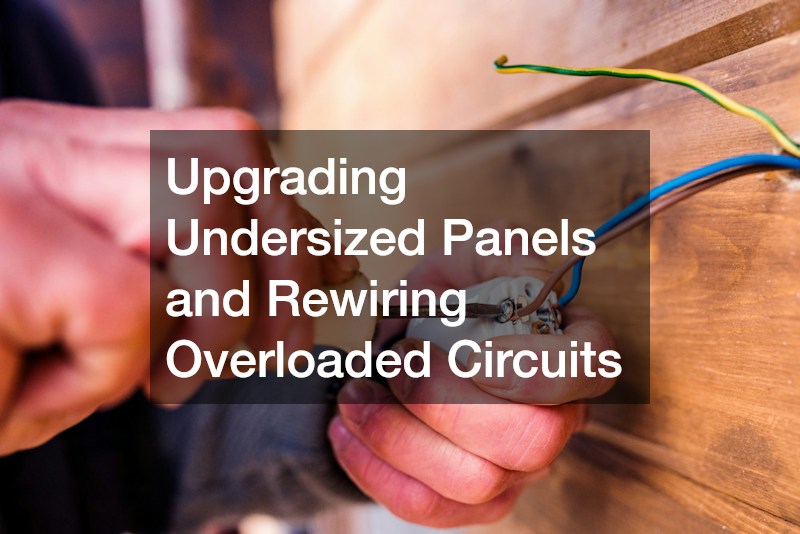
Electrical service designed decades ago was never intended to support today’s appliances, home offices, and electric vehicle chargers. Older 60- or 100-amp panels fill up quickly, forcing new loads onto existing circuits. Overloaded circuits trip frequently, overheat conductors, and stress connections, while some outdated panel brands have breakers that may fail to trip under fault conditions. Warning signs include warm outlet covers, flickering lights, buzzing breakers, and scorched receptacles.
A licensed local electrical contractor begins with a load calculation to determine whether the service should be upgraded, often to 200 amps with a new panel and meter base. Overloaded circuits are split, and dedicated lines are added for kitchen appliances, laundry, heating and cooling equipment, and vehicle chargers. Aluminum branch wiring is remediated with approved connectors, and AFCI and GFCI protection is added where required. Grounding and bonding are verified, and a whole-home surge protector shields sensitive equipment.
Stripping Worn Shingles and Installing Synthetic Underlayment
Shingles at the end of their service life curl, crack, and shed granules, losing their ability to shed water and resist wind. Older felt underlayment beneath them dries out and becomes brittle, tearing easily and offering little backup protection once water gets past the surface. Simply adding a new layer over the old one traps heat, adds weight, and hides soft or rotted decking that continues to deteriorate.
Qualified roofers tear off the old shingles and underlayment down to the deck, inspecting every panel and replacing soft or delaminated sheathing. New drip edge is installed at eaves and rakes, and ice-and-water membrane protects eaves, valleys, and penetrations. Synthetic underlayment, which is lighter, stronger, and more tear-resistant than felt, covers the remaining deck and provides a reliable secondary barrier. New flashing, balanced ventilation, and architectural shingles fastened to manufacturer specifications complete a durable system.
Sizing Wastewater Tanks and Trenching Level Drainfields
Onsite wastewater systems must be sized and installed correctly to work for decades. Tanks that are too small fill quickly, sending solids into the drainfield before they can settle. Trenches dug unevenly cause effluent to rush to the lowest point, overloading one section of the field while the rest sits unused. Soil that is compacted or smeared during excavation loses its ability to absorb water, and poorly placed fields can contaminate wells or surface water.
Proper local septic installations begin with soil evaluations and percolation tests, followed by a design that sizes the tank according to bedroom count and local health codes. Watertight precast concrete or polyethylene tanks are set on compacted, level bases. Drainfield trenches are excavated along the contour so each line stays level, with trench bottoms scarified rather than smeared. Perforated pipe or chambers are bedded in washed gravel, fed through a level distribution box, and covered with fabric and topsoil to protect the field. Risers bring access lids to grade so future pumping is quick and inexpensive.
Grinding Garage Slabs and Applying Chemical-Resistant Resin
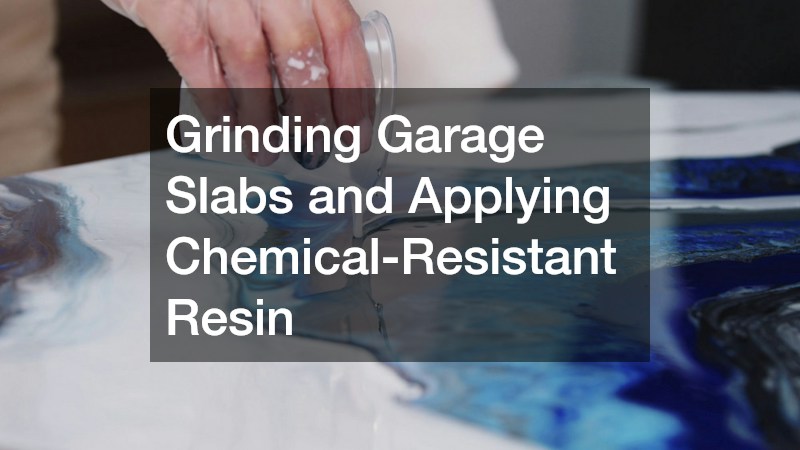
Garage slabs endure oil leaks, road salt, gasoline spills, and hot tires every day. Bare concrete absorbs those substances, staining permanently and weakening the surface paste. Freeze-thaw cycles and deicing salts cause spalling, and moisture vapor rising through the slab can lift poorly bonded paints. Cheap, single-coat kits from home centers often peel within a year, especially where hot tires grip and pull the coating away from the surface.
A professionally installed epoxy floor coating begins with diamond grinding that removes contaminants and creates a concrete surface profile the coating can bond to. Moisture testing confirms the slab is suitable, and cracks and spalls are repaired with resin-based patching compounds. Installers apply a 100 percent solids base coat, broadcast decorative flakes or quartz for texture, and finish with a UV-stable polyaspartic or urethane topcoat. The result is a seamless, chemical-resistant surface that withstands hot tires and cleans easily. Coved edges along the walls and a slip-resistant additive in the topcoat make the space safer and simpler to maintain.
The essentials of a home form the base for everything else. Well-managed canopies, healthy turf, and solid perimeter structures protect the grounds. A durable shell keeps weather out, while properly sized heating and cooling equipment, safe electrical service, and correctly installed wastewater systems support daily life. Protective treatments and durable surfaces keep insects, moisture, and wear from undermining the structure. When any of these essentials falters, the effects spread to the rest of the property.
Upgrading and maintaining the essentials requires a long-term approach. Seasonal landscape care, annual insect inspections, routine heating and cooling service, periodic electrical evaluations, regular wastewater maintenance, and inspections of shingles and outdoor structures catch problems early. Replacing worn components with properly sized, high-quality equipment and materials reduces future repairs and improves performance across the entire home.
The reward is a property where every improvement rests on a solid foundation. Systems operate safely and efficiently, outdoor spaces remain healthy and inviting, and the structure holds its value for decades. By upgrading the essentials and protecting everything built on them, homeowners create a home that is reliable, comfortable, and ready for the years ahead.